
Running Trekanten in Trollheimen - A Trail Guide
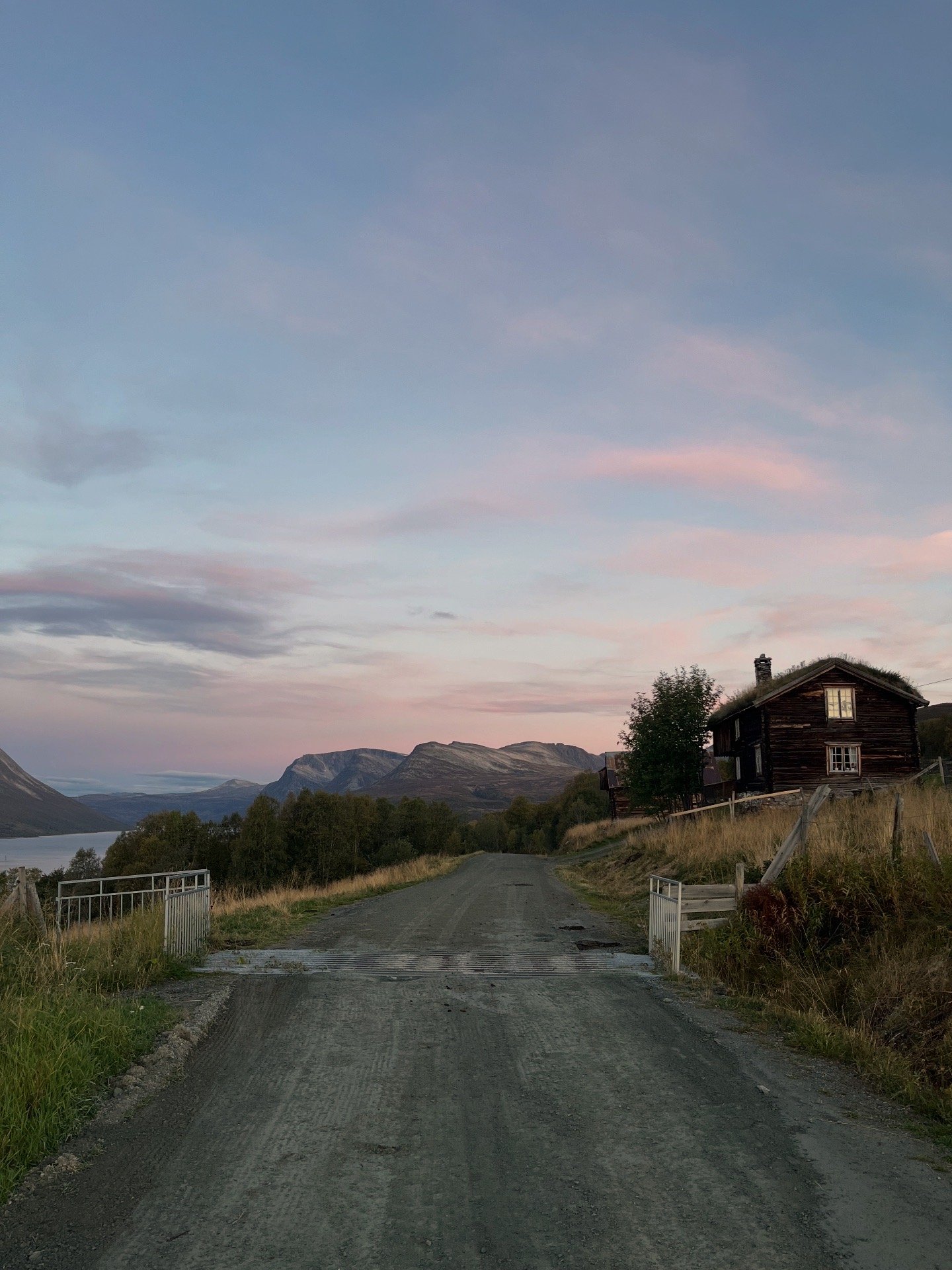
The entrance into Gjevillvassdalen.
There are days in the mountains that feel less like outings and more like chapters — the kind of days you don’t plan as much as you step into. Our autumn run of Trekanten in Trollheimen became one of those. Ten hours of movement, golden light, shifting terrain, and the quiet companionship only long trail days can cultivate.
Early mornings in Oppdal in September mean frost. And honestly (not really), there’s no better way to start the day than scraping a layer of ice off the car windows before heading into the mountains. We left early and drove toward Gjevilvasshytta — the iconic timber lodge tucked into one of Norway’s most harmonious landscapes, known for its historic architecture and deep connection to the Trollheimen mountains. Operated by DNT, this was the final weekend of the season with staff at the lodge. The lake beside it was still, holding the last reflections of morning clouds. The air carried that unmistakable autumn sharpness — clean, cool, full of promise.
Toward Jøldalshytta — Through Soft Valleys and Broad Views
The first stretch toward Jøldalshytta runs through the eastern, gentler parts of Trollheimen, including the beautiful Minnilldalen valley, which is often described as one of the loveliest lowland corridors in the region.
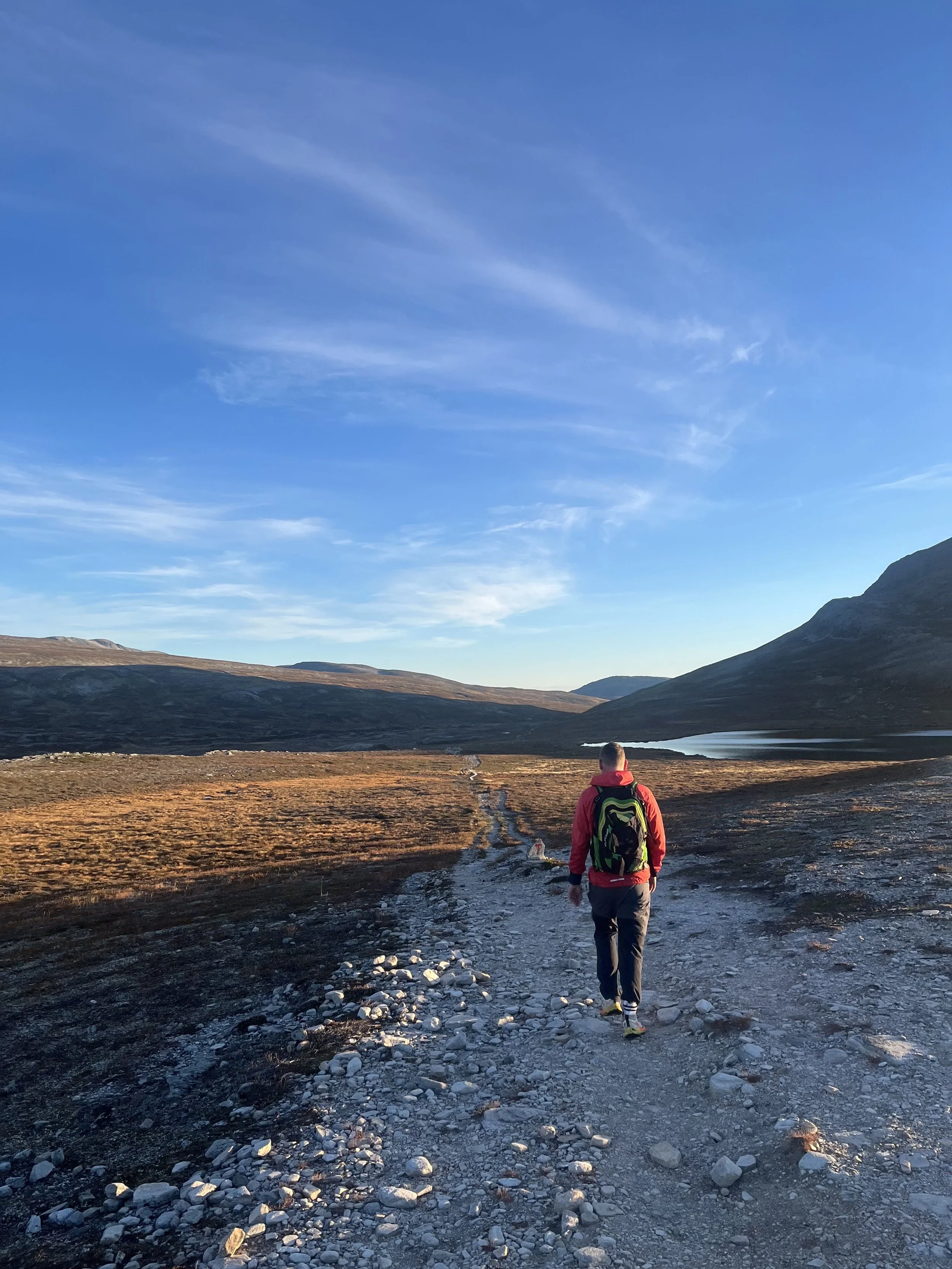
Here, the terrain rolls rather than rises. Moss glows in deep greens. Autumn heather burns soft red. Streams braid across the trail, as if the land is quietly rearranging itself for the season.
Somewhere along this section, a reindeer herd moved across a distant ridge — a brief moment, just silhouettes shifting against the sky. It’s not uncommon here; the area between Jøldalshytta and Trollheimshytta is known for roaming reindeer and open grazing pastures.
They appeared, paused, and drifted away again. A reminder that we were guests moving through someone else’s home.
By the time we reached Jøldalshytta, the sun had dipped into a warmer angle. We ate, refilled, and changed into fresh socks — small luxuries that make a long day feel new again. The day still felt full of promise. We greeted a school class whose return had been unexpectedly delayed after their bus slid off the road on the way to the pickup point, 5 kilometers closer to civilization.
Across to Trollheimshytta — The High Heart of the Triangle
Leaving Jøldalshytta, the route toward Trollheimshytta is where the landscape opens up — both in elevation and in mood. The standard path over Geithetta offers sweeping views across inner Trollheimen: rugged ridgelines, deep meltwater‑carved valleys, and a landscape that shifts between soft and severe depending on the light. In hindsight, it’s the route we wished we’d chosen. Instead, we ran straight through Svartdalen — living up to its name, cloaked in shadow. The elevation looked gentler, and the trail was pleasant enough at first. But after about 30 minutes of running from Jøldalshytta, the terrain turned rocky and technical. Our pace slowed as we carefully navigated down the valley beside the rushing river, picking our way over boulders and uneven ground.
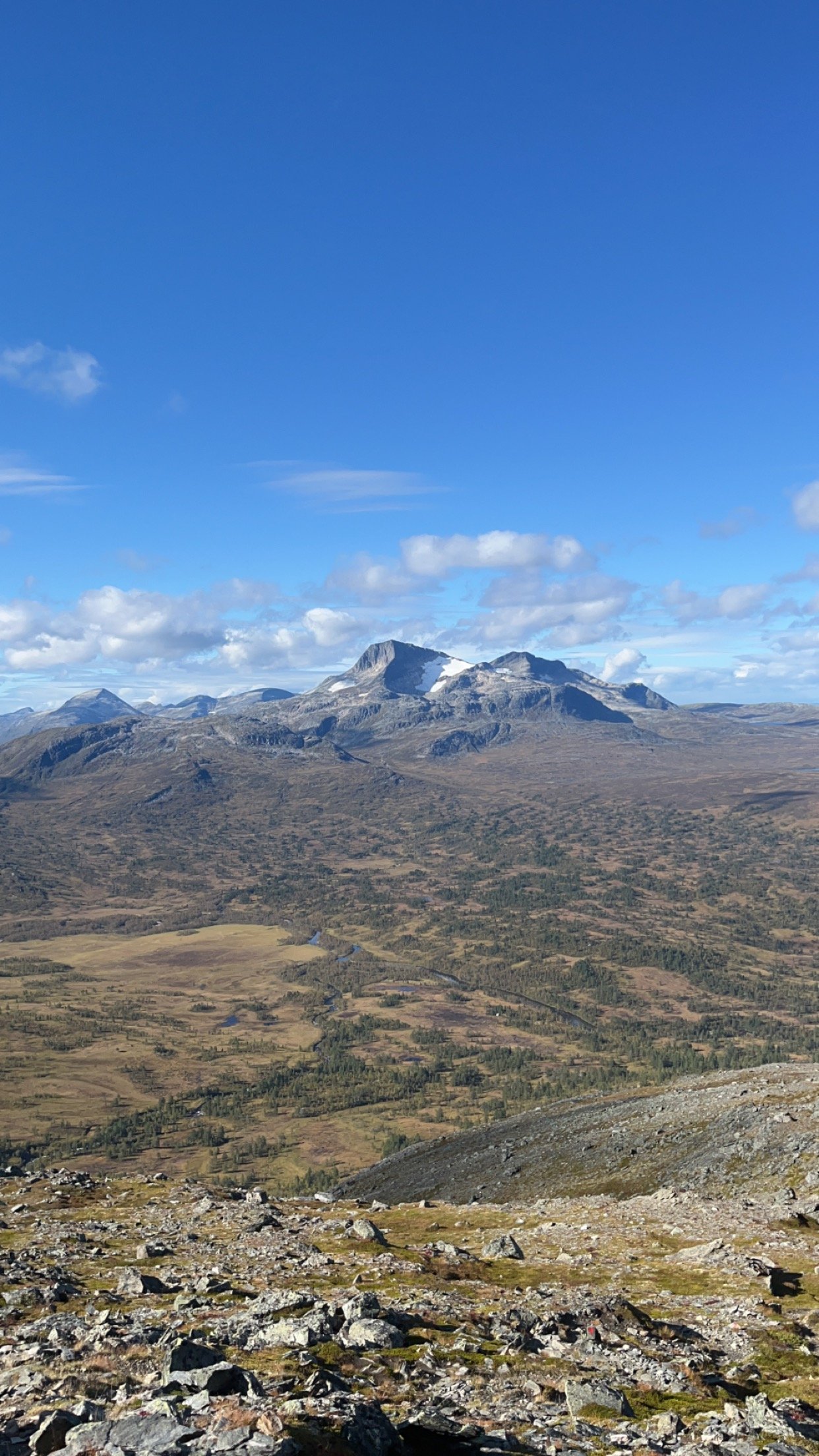
Somewhere out there, if you look westward on the right sections of the route, the peak of Snota rises — one of the most iconic mountains in Trollheimen, often climbed as an extension from Trollheimshytta on multiday variations of Trekanten.
Its pyramid-like profile feels immovable, a kind of anchor in the region’s geography.
We didn’t climb it that day — but just knowing it watched over the terrain gave the run a deeper sense of place.
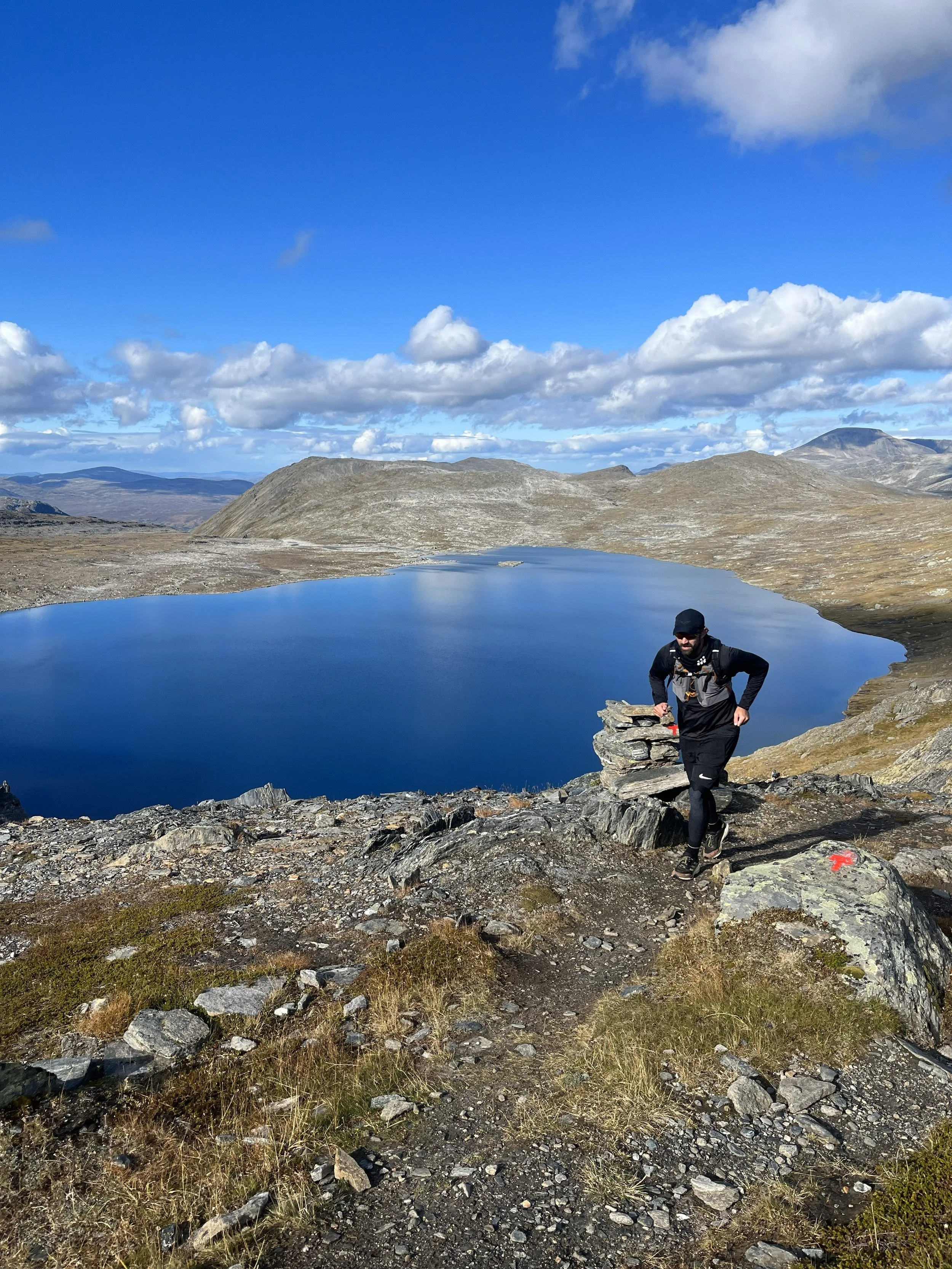
As we approached Trollheimshytta, the terrain dipped into rugged folds: rocky paths, tiny tarns catching the afternoon light, pockets of silence that seemed to hold the entire season inside them. Trollheimshytta itself, set low in the valley, felt like arriving at the center of a compass — every direction a different piece of Trollheimen’s personality.
The Long Return — Back to Gjevilvasshytta
The final stretch back toward Gjevilvasshytta carried that unmistakable “late‑in‑the‑day” feeling — legs tired but steady, minds quiet but alert. The landscape softened again, easing into rolling terrain, birch forests, and those wide valley views stretching toward Gjevilvasskamman and the open skies above Oppdal. But let’s rewind a few kilometers. Before you get to enjoy that gentle descent toward the finish, you have to face Trekanten’s final boss: the ascent to Mellomfjellet. The climb begins almost immediately after leaving Trollheimshytta — roughly 400 meters of elevation before freedom. It’s a tough push on any day, but with more than 40 kilometers already in the legs, it becomes a test of grit as much as strength.
Autumn light makes everything feel closer to memory even while it’s happening. The trail, the air, the sound of your shoes on packed earth — it all feels like something you’ll recall years from now, not just hours later.
When the lake finally reappeared and Gjevilvasshytta stood waiting, golden in the evening light, it felt like closing a full-circle story. Ten hours behind us, but the day somehow felt weightless.
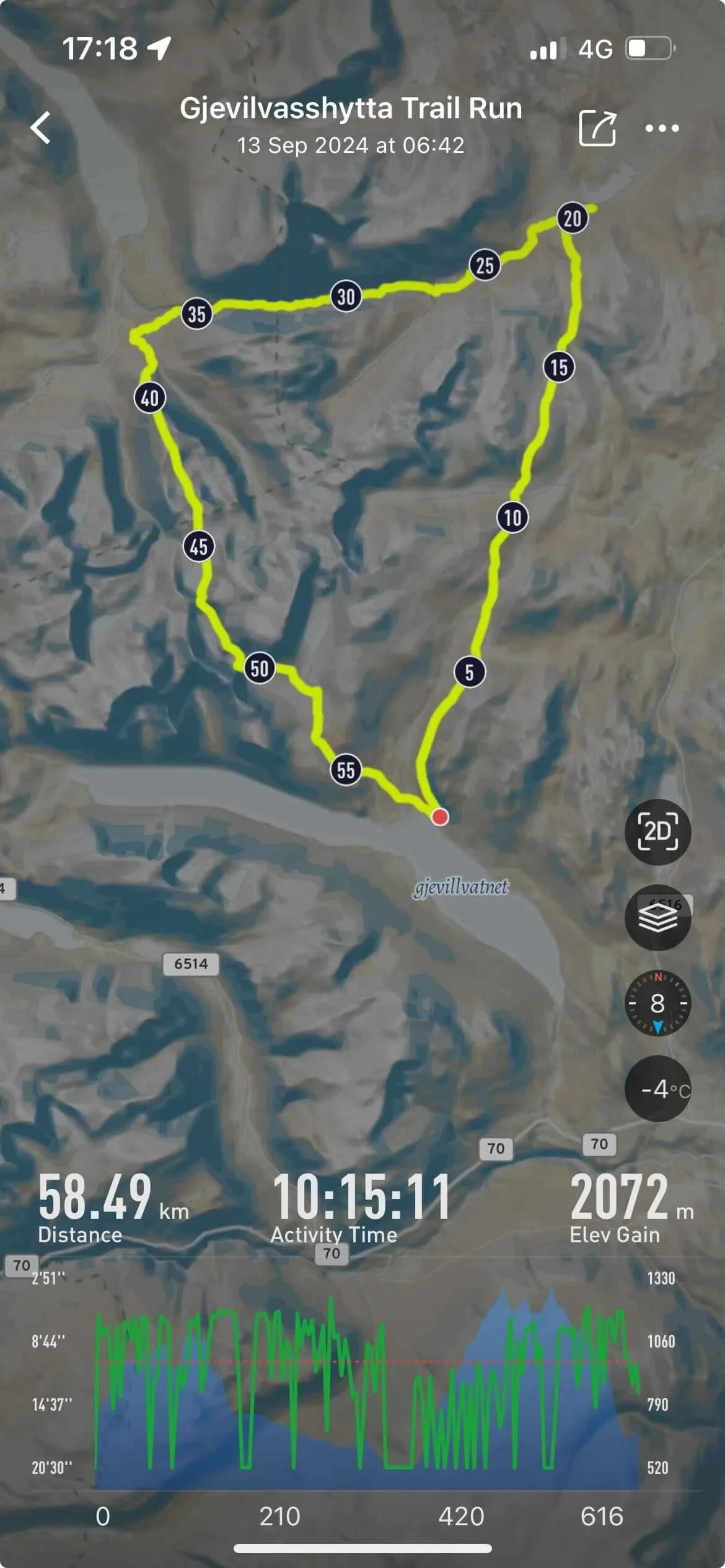
Key Details
Distance: ~55-60 km (depending on route)
Terrain: Alpine, technical, mixed trail
Location: Trollheimen, Norway
Best season: July – September
Why It Stands Out
Trekanten isn’t just a route — it’s a full mountain experience. Long climbs, quiet plateaus, and moments where the scale of the landscape makes the effort feel small.
FAQ
Where is Trekanten Trollheimen?
Trekanten is located in Trollheimen mountain area in central Norway. Oppdal is the closest town.
Can you run the Trekanten loop in one day?
Yes, but it’s a demanding 50+ km mountain effort with significant elevation.
