
When Winter Hangs On : Stay injury-free

And how to prepare smartly when snow, ice, and asphalt rule your training
For trail runners, spring brings a familiar mix of excitement and frustration. Race season is suddenly on the horizon—your calendar fills with ambitions, long‑awaited mountain adventures, and goals that seemed far away in January. Motivation rises. Weekly kilometers rise. Intensity rises.
But the mountains?
They’re still asleep under snow and ice.
This mismatch—ambition rising faster than the terrain allows—is one of the most dangerous moments of the entire running year. It’s the season where enthusiasm can quietly turn into overuse injuries, tendon trouble, or stress reactions. And it’s the season when many runners end up swapping soft, forgiving trail surfaces for winter‑hardened roads and asphalt.
That transition, although unavoidable for most, comes with risks that aren’t talked about nearly enough.
The Hidden Cost of Early‑Season Motivation
When runners come out of winter, they often carry strong aerobic fitness from skiing, cycling, strength training, or cross‑training. Heart and lungs are ready. The engine feels good.
But the bones and tendons?
They didn’t get the same kind of stress they’ll suddenly face when running mileage ramps up. Biological tissues adapt slowly—far slower than motivation.
This is why the early spring months see such a spike in repetitive‑stress injuries. Runners increase volume quickly because they feel ready. But beneath that fitness sits a musculoskeletal system that simply needs more time.
When Snow Blocks the Trails, Asphalt Fills the Gap
Early-season conditions create another twist: the surface.
Snow‑packed singletracks, iced ridgelines, and muddy shoulders mean many runners turn to roads to get their daily kilometers in. Asphalt is predictable, clean, and accessible—but it’s also unforgiving.
The difference in loading between trails and asphalt may feel subtle, but over weeks of rising volume, it’s enough to contribute to shin splints, plantar fasciitis, knee pain, and even stress fractures. Trails naturally vary step length, cadence, and impact. Roads repeat the same movement thousands of times, stride after stride.
That consistency is good for speed—but a risk during ramp‑up season.
Why Winter Fitness Doesn’t Transfer Perfectly

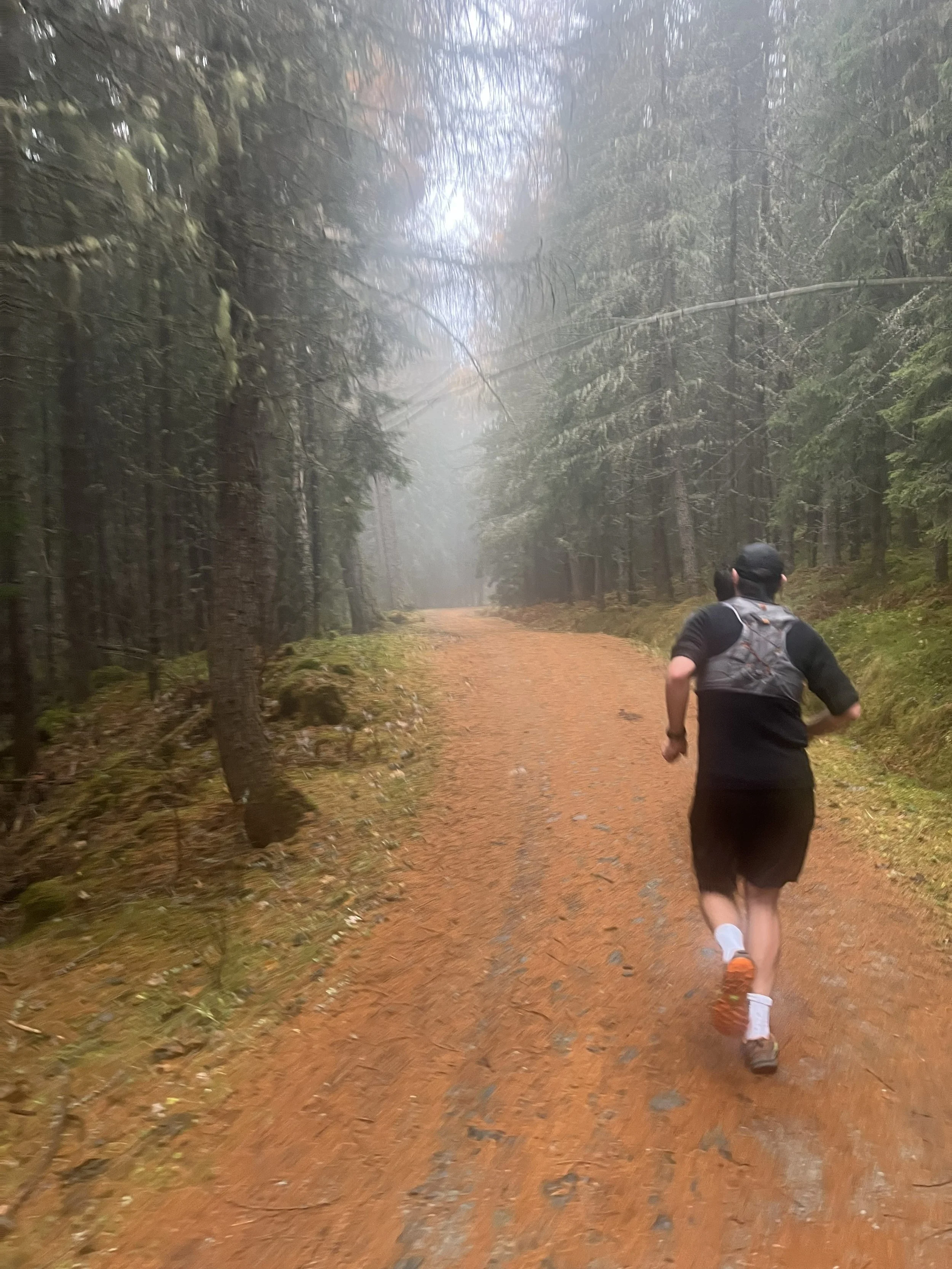
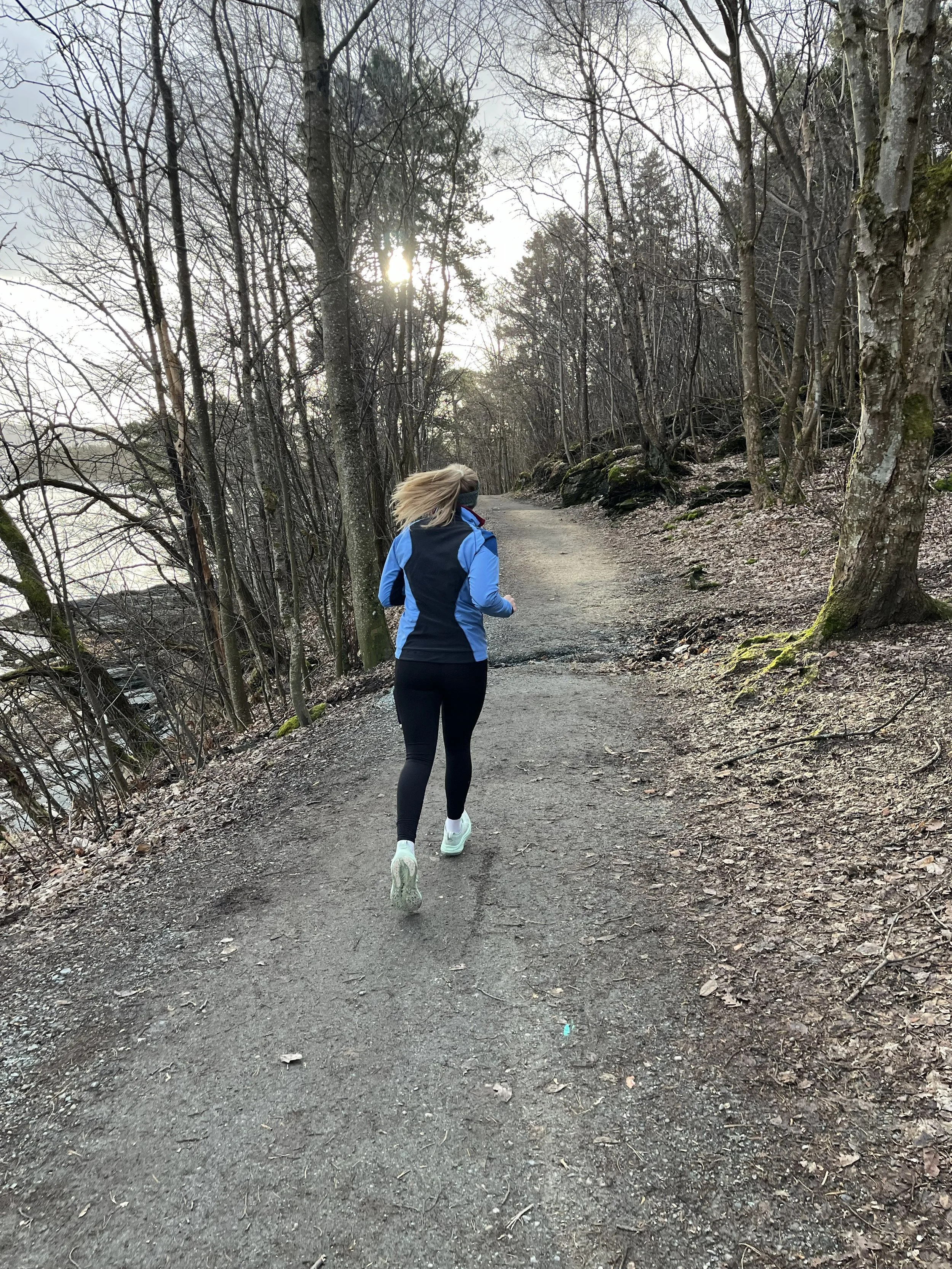

Even a well‑trained skier, cyclist, or strength athlete hasn’t been conditioning the small stabilizers, tendons, and impact‑absorbing tissues used in trail running.
The hips and glutes need specific running activation.
The lower legs need progressive loading.
The Achilles, plantar fascia, and tibia respond slowly to repetitive pounding.
Downhill eccentric strength isn’t trained at all during winter gym sessions.
Runners often return to running with strong aerobic engines but underprepared legs. And when the motivation is high and the trails are closed, it becomes easy to overdo it before the true season even begins.
So How Do You Reduce the Risk?
Build Gradually—Even More Gradually Than You Think
This is the big one. The classic rules—small weekly increases in volume, cautious layering of intensity—still work because they align with how bone and tendon adapt. The goal isn’t to get fit as fast as possible; it’s to keep your body healthy long enough to build toward fitness.
Mix Surfaces to Vary the Load
If trails are still wintery, aim for variety: gravel roads, forest roads, packed snow routes, treadmills, and yes, some asphalt—but not only asphalt. A rotation of surfaces breaks the monotony and spreads impact across different muscle groups.
Strength Train Twice a Week
This is non‑negotiable and one of the best tools runners have in pre‑season. Focus especially on:
Lower-leg strength (calf complex, tibialis)
Hip and glute stability
Core rotation control
These muscles act as shock absorbers when trails finally open up.
Fuel Like You Mean It
Underfueling is one of the fastest ways to get injured. Bones and tendons weaken when energy availability is low—especially during heavy spring training loads. Eat before long runs. Replenish afterward. Maintain good vitamin D levels during the last dark months. The basics matter.
Hold Back on High Intensity
Fast downhill work, long tempo sessions, and big back‑to‑back efforts should wait until your body feels adapted again. Fitness will come—but only if you’re healthy enough to train consistently.
Pick the Right Footwear

Footwear matters
Early-season runs often last longer and hit harder. Cushioned, stable road shoes are simply safer for this time of year. Rotating between shoe types is a proven way to lower injury risk. Save the feather‑light race shoes for later.
If there’s one training tweak that feels almost too simple to be true, it’s this:
rotating between two or more pairs of running shoes reduces injury risk.
Not because it’s trendy.
Not because runners like buying gear.
But because different shoes load your body in different ways.
Every shoe has its own geometry, stack height, cushioning, stiffness, and rocker profile. When you rotate between them, you subtly shift how force travels through your legs. Tendons, bones, and muscles avoid repeating the same exact stress patterns day after day — and that variety is exactly what early‑season training needs.
In other words:
vary the tool → vary the load → reduce the risk.
And for pre‑season, when many runners are grinding out daily kilometers on asphalt, that load variation becomes even more important. Hard surfaces amplify repetitive stress; rotating shoes dampens it.
So What Should Runners Actually Use?
Most runners benefit from a simple three‑shoe system during spring build‑up:
1. A Highly Cushioned Daily Trainer
This shoe absorbs repetitive shock and protects tendons on long, steady road miles.
Great examples:
Asics Gel-Nimbus 26 – soft, stable, effortless everyday miles.
Hoka Clifton 9 – classic light-cushion trainer with a friendly rocker.
New Balance Fresh Foam X 1080 v13 – balanced cushioning for mid‑length runs.
These are the “bread and butter” shoes for early spring.
2. A Slightly Firmer Tempo or Light-Performance Trainer
These shoes add variation in geometry, stiffness, and turnover — without going full race‑shoe.
Great examples:
Saucony Endorphin Speed 4 – snappy feel, flexible plate, ideal for controlled tempo.
Nike Pegasus Turbo Next Nature – light, responsive, great for medium‑fast days.
Scarpa Golden Gate ATR – hybrid for mixed gravel and road, perfect transitional shoe.
Use these when you want variety or small injections of speed.
3. A Trail Shoe for Gradual Reintroduction
On the days when parts of the forest or lower trails melt, a stable trail shoe helps your body remember how to move off‑road again — without diving into technical terrain too early.
Great examples:
Salomon Sense Ride 5 – soft, forgiving, a superb early-season trail option.
NNormal Tomir – durable, stable, friendly for mixed spring conditions.
Saucony Peregrine 14 – confidence-inspiring grip for wet roots and melting snow.
These models help rebuild foot and ankle stability before summer’s real mountain terrain appears.
Sources (General References)
These are the evidence bases behind the article’s physiological and training points:
American College of Sports Medicine (ACSM) – Impact surface research, endurance training guidelines
European College of Sport Science – Periodization & overuse injury statistics
Running Injury Clinic – Load-related injury patterns & adaptation timelines
International Journal of Sports Medicine – Tendon adaptation research
Medicine & Science in Sports & Exercise – Bone stress, ramp‑up injury risk
Malisoux et al., 2015 – Shoe rotation and injury reduction
IOC Consensus Statement on Relative Energy Deficiency in Sport (RED‑S)
