
Breaking 21 Hours at Badwater Wasn't Supposed to Happen
Some ultramarathon records feel untouchable.
Badwater 135 was one of them.
The 135-mile race across California's Death Valley has long been regarded as one of endurance sport's harshest tests. Beginning 282 feet below sea level at Badwater Basin before climbing to Whitney Portal at more than 8,300 feet, the course combines relentless elevation gain with temperatures that regularly exceed 45°C (113°F). Death Valley
For years, Yoshihiko Ishikawa's 21:33:01 course record appeared beyond reach.
Then Max Jolliffe arrived.
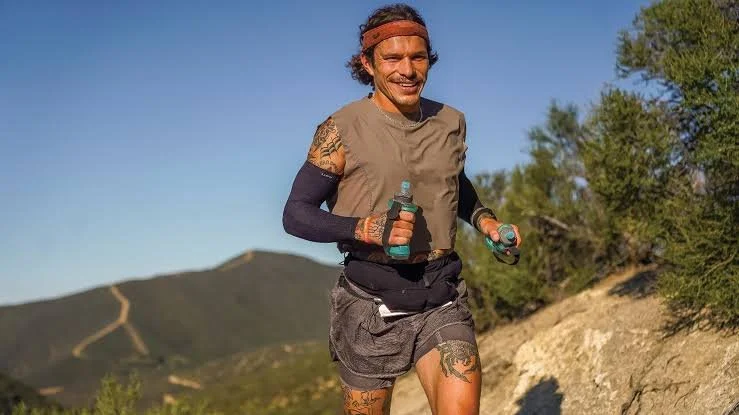
The American stopped the clock in 20:53:41, becoming the first runner in race history to break the 21-hour barrier while lowering the overall course record by almost 40 minutes.
More Than Just Another Victory
Jolliffe's result wasn't simply another race win.
It represented one of the biggest individual performances of the ultrarunning season.
Badwater rewards far more than raw speed. Athletes must manage extreme heat, hydration, nutrition and fatigue while crossing one of the harshest environments on Earth. Even small mistakes can become race-ending hours later.
Breaking the course record is rare.
Breaking it by nearly 40 minutes is extraordinary.
A Different Story Than Cocodona
For many trail-running fans, Jolliffe's name has become closely associated with ambitious 200-mile races.
Over the past few seasons he has built a reputation as one of the sport's most exciting young ultrarunners, but also one willing to take risks. Those risks haven't always paid off.
His DNF at Cocodona 250 earlier this year was another reminder that ultrarunning rarely follows a straight line.
Badwater tells a different story.
Instead of becoming another chapter about potential, it became the performance that defines his career—at least for now.
The same athlete who walked away from Cocodona disappointed has now rewritten one of ultrarunning's oldest records.
The Women's Race Was Historic Too
Jolliffe wasn't the only runner making history.
American Carmen Maria Perez finished second overall in 21:05:32, also moving inside the previous overall course record while setting a new women's course record.
That means two athletes ran faster than anyone ever had before at Badwater 135.
For a race where conditions often dictate survival rather than speed, it was an extraordinary day in Death Valley.
Why Are Records Falling Everywhere?
Jolliffe's run is also part of a wider trend.
Over the past few months, several iconic ultramarathons have seen long-standing records disappear.
At Western States Endurance Run, the men's and women's races produced performances that immediately entered the history books.
At Hardrock 100, Ludovic Pommeret and Courtney Dauwalter both lowered course records on one of the world's toughest mountain courses.
Now Badwater has joined the list.
Every race is different. Every course rewards different strengths.
But the pattern is becoming difficult to ignore.
Training methods continue to evolve. Athletes have access to better data, nutrition and equipment than ever before, while the depth of elite competition keeps growing.
The result is a generation of runners pushing established limits at races once considered almost impossible to improve.
A Career-Defining Run
One race doesn't define an athlete forever.
But some performances fundamentally change how that athlete is viewed.
Before Badwater, Max Jolliffe was widely respected as one of ultrarunning's most promising talents.
After Badwater, he is the course record holder at one of the sport's most iconic races—and the first runner to break 21 hours in Death Valley.
For a race built around suffering rather than speed, that's a performance likely to be remembered for years.
