Why Trail Running’s Biggest Series Are Racing East
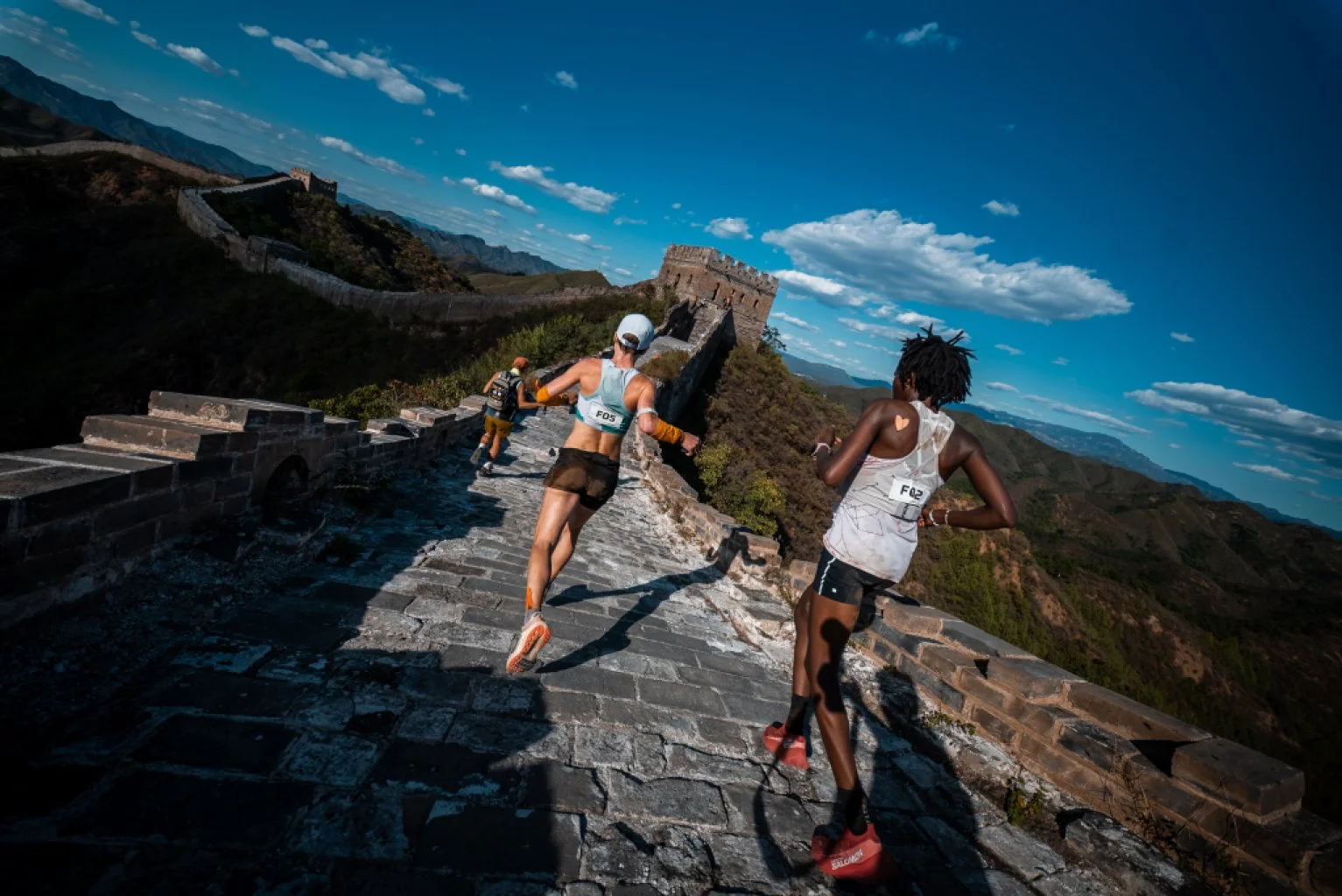
Photo : © GoldenTrailSeries® – Great Wall
From 5,400 runners on Jeju Island to a 9,500-runner UTMB event in China and the Golden Trail World Series final in South Korea, Asia is no longer trail running’s next market. It is already reshaping the calendar.
This weekend, 5,400 runners gathered on the South Korean island of Jeju for four races through volcanic terrain and around Hallasan, the country’s highest mountain. TransJeju by UTMB was significant not simply because of its scale, but because it arrived in the middle of a remarkable stretch for elite trail running in Asia.
One week earlier, the Golden Trail World Series raced across the steep stone steps of the Great Wall of China. Before that came Myoko Trail in Japan. Later this month, the series will crown its overall champions at Muju Trail in South Korea.
Meanwhile, UTMB is preparing for another major Asian event. Ultra-Trail Mount Yun in China expects close to 9,500 runners, with Chinese athletes accounting for 97 per cent of the field.
This is more than a busy month on the calendar. It is another indication that the competitive and commercial centre of trail running is becoming considerably less European.
The audience already exists
It would be misleading to describe trail running in Asia as new. Hong Kong, Japan, China, South Korea and several countries across Southeast Asia have long-established mountain cultures, local races and highly active running communities.
What is changing is the attention paid by the sport’s largest international organisers.
The scale of events such as TransJeju and Mount Yun shows why. TransJeju attracted 5,400 participants across its 20K, 60K, 100K and 100-mile distances, with women making up 32 per cent of the field. Mount Yun expects almost twice as many runners, including a field that is overwhelmingly domestic.
Those numbers matter. They show that these races are not dependent on a small group of international athletes travelling east in search of an exotic destination. There is already a substantial local audience capable of sustaining major events.
For organisers and brands, that makes Asia much more than an expansion opportunity. It is a mature running market with its own athletes, consumers, clubs and race culture.

© GoldenTrailSeries® – Myoko Trail – C. NOULIN
Results are matching participation
The competitive depth seen at TransJeju reinforced the point.
China’s Ruqin Wang and Lingjie Chi won the men’s and women’s 100K races, while Japanese runners Koken Ogasawara and Terunobu Kurokawa completed the men’s podium. Japan’s Yoshiki Hoshino won the 60K, ahead of compatriots Hiroki Kai and Hikaru Kitamura, while China’s Kaili Fan led the women’s race.
The international fields remained strong, but the results did not resemble a visiting European elite sweeping the main prizes. Athletes from across East Asia were setting the pace.
There is also a broader shift in where the sport’s biggest contests are being decided. The final rounds of the 2026 Golden Trail World Series form an Asian triple-header: Myoko in Japan, Jinshanling in China and the Grand Final at Muju in South Korea.
At Jinshanling, Patrick Kipngeno recorded his sixth victory from six Golden Trail races in Asia. Philemon Kiriago finished second and strengthened his overall series lead, while Ruth Gitonga earned her first GTWS victory in the women’s race.
Norway’s Anders Kjærevik also left a mark on the Asian swing, setting the fastest downhill segment at both Myoko and Jinshanling.
These are not secondary rounds placed at the end of a settled championship. The points collected in Asia have changed the standings, and Muju will determine the overall titles.
A final designed to change everything
The decision to hold the Golden Trail World Series Grand Final in South Korea is particularly telling.
Muju’s 25.6-kilometre course contains 2,294 metres of elevation gain, taking the field across steep ridgelines, rocky trails, coniferous forest and past Buddhist temples. The women race on 24 October, followed by the men on 25 October.
Up to 300 points are available at the final, enough to transform the championship standings in a single race. The invited field includes the leading 30 men and women from the regular season alongside qualifying athletes from the Golden Trail national competitions.
For a series built on globally recognisable races and high-quality broadcasts, placing its decisive weekend in South Korea is more than symbolic. It brings athletes, teams, sponsors and international media to a region the industry increasingly considers central to its future.
The financial investment is rising as well. The Golden Trail World Series has increased its total 2026 prize purse by 45 per cent to €435,000, with €30,000 awarded to each overall champion.
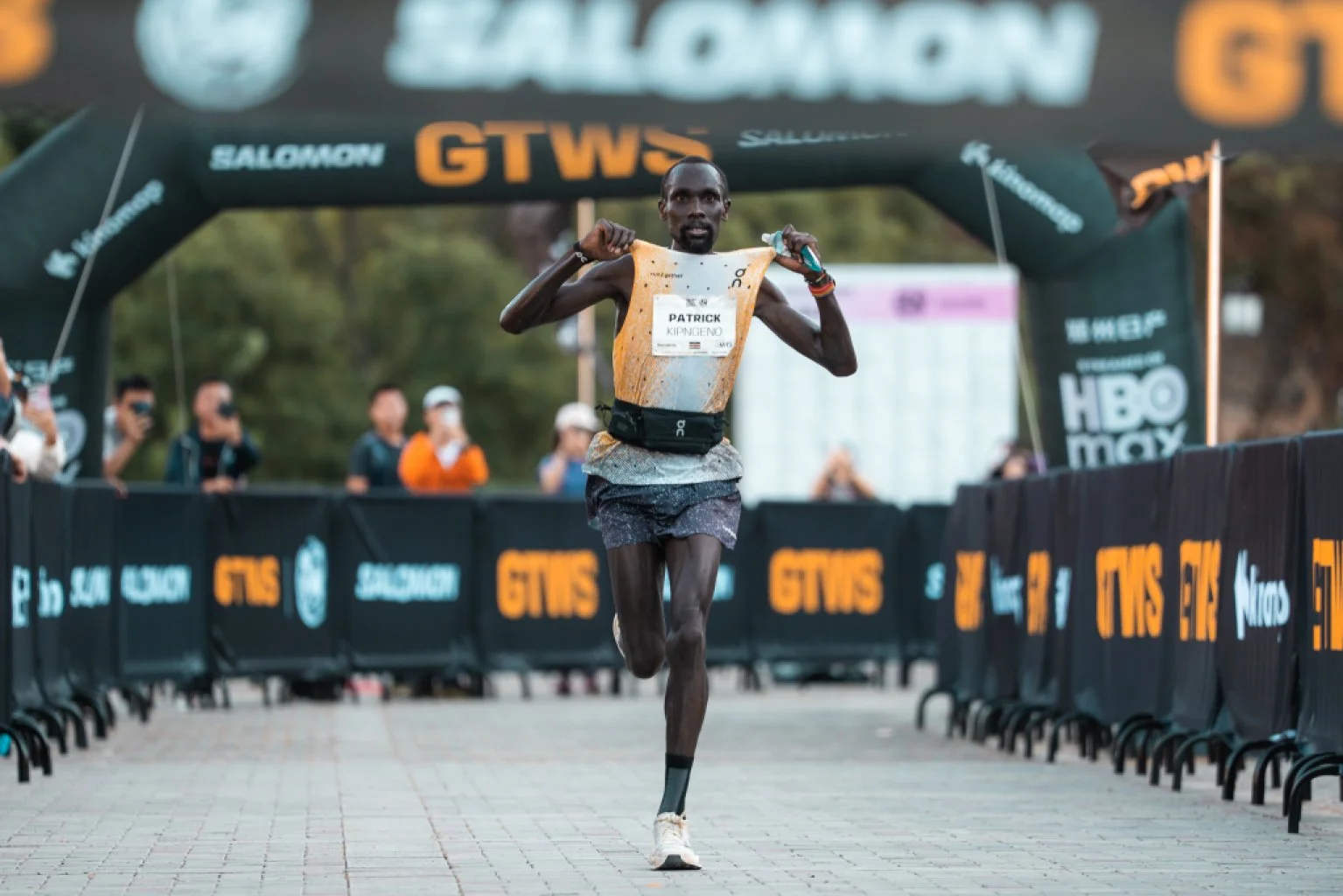
© GoldenTrailSeries® – Great Wall – C. NOULIN
Why the major series are moving east
Asia offers an unusually strong combination for modern trail running: large urban populations close to mountainous terrain, growing outdoor communities, ambitious domestic brands and race organisers capable of delivering events at considerable scale.
It also gives international series something increasingly difficult to find in an expanding global calendar: courses and visual identities that feel genuinely distinct.
The volcanic landscape of Jeju, the relentless steps of the Great Wall and Muju’s forested ridgelines do not look like interchangeable versions of an Alpine race. Each offers a setting that can be immediately recognised in photographs and broadcasts.
That difference has commercial value. It gives events a stronger identity while providing shoe and apparel brands with access to an audience that extends far beyond the runners standing on the start line.
But international expansion comes with responsibility. The strongest Asian races will not succeed simply by importing a European format and attaching a global logo. They will need to preserve local character, create opportunities for domestic athletes and ensure that the communities which built the scene remain visible as international attention grows.
The future is multi-polar
The Alps will remain one of trail running’s defining regions. Chamonix, Zegama, Sierre-Zinal and the Dolomites are not about to lose their importance.
What is disappearing is the idea that the sport’s most consequential weeks must take place in Europe or North America.
This autumn, thousands of amateur runners are competing in major Asian events while the world’s best short-distance trail athletes contest a championship across Japan, China and South Korea. Those developments are happening at the same time, supported by local demand rather than international attention alone.
Trail running is not simply expanding east. Its map is becoming multi-polar.